RISD Furniture Design Sophomore Drawing Final 1: Children's Plywood Furniture
For this project, the class was instructed to design a template for a piece of furniture that could be easily assembled and taken apart, and fit the proportions of a small child. Each student was given a 30x30 inch piece of plywood which was to serve as the main parameter for the project. Every piece included in our templates had to fit within the perimeter of the 30x30 inch piece of plywood- no exceptions. Once a design was finalized, it was to be cut out by a CNC machine and finished by hand.
The main 30x30 parameter posed an interesting challenge wherein the personal preferences of a student were often challenged in exchange for a more optimal design. Of course, within the world of design this is somewhat of a constant that often looms over the designer. However, within the furniture design program at RISD we are given lots of wiggle room when it comes to our own designs. Although suggestions are made, they are not as strictly enforced as this. This time, we either had to conform to the rule or essentially be excluded from the project.
Another exciting aspect of the project was that, unlike our previous projects, which required days or even weeks of building and perfecting (even with the final blueprint), this design could be made at the click of a button once the design was finalized. Additionally, wood movement is not an issue that needs to be accounted for with plywood. Basically, most of the pain of making a traditional piece of furniture which we had learned throughout the course of the year was no longer something our designs had to work around.
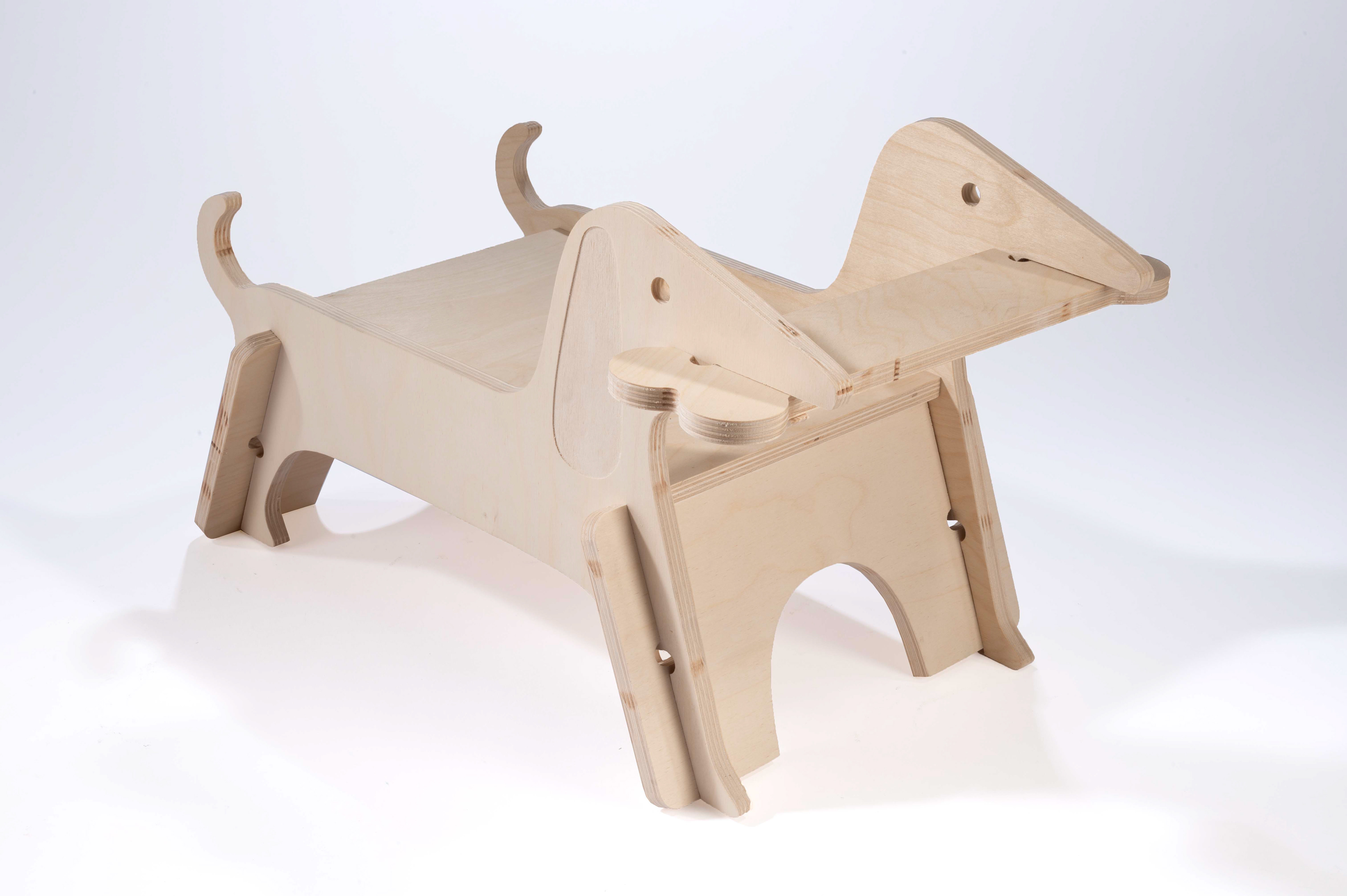
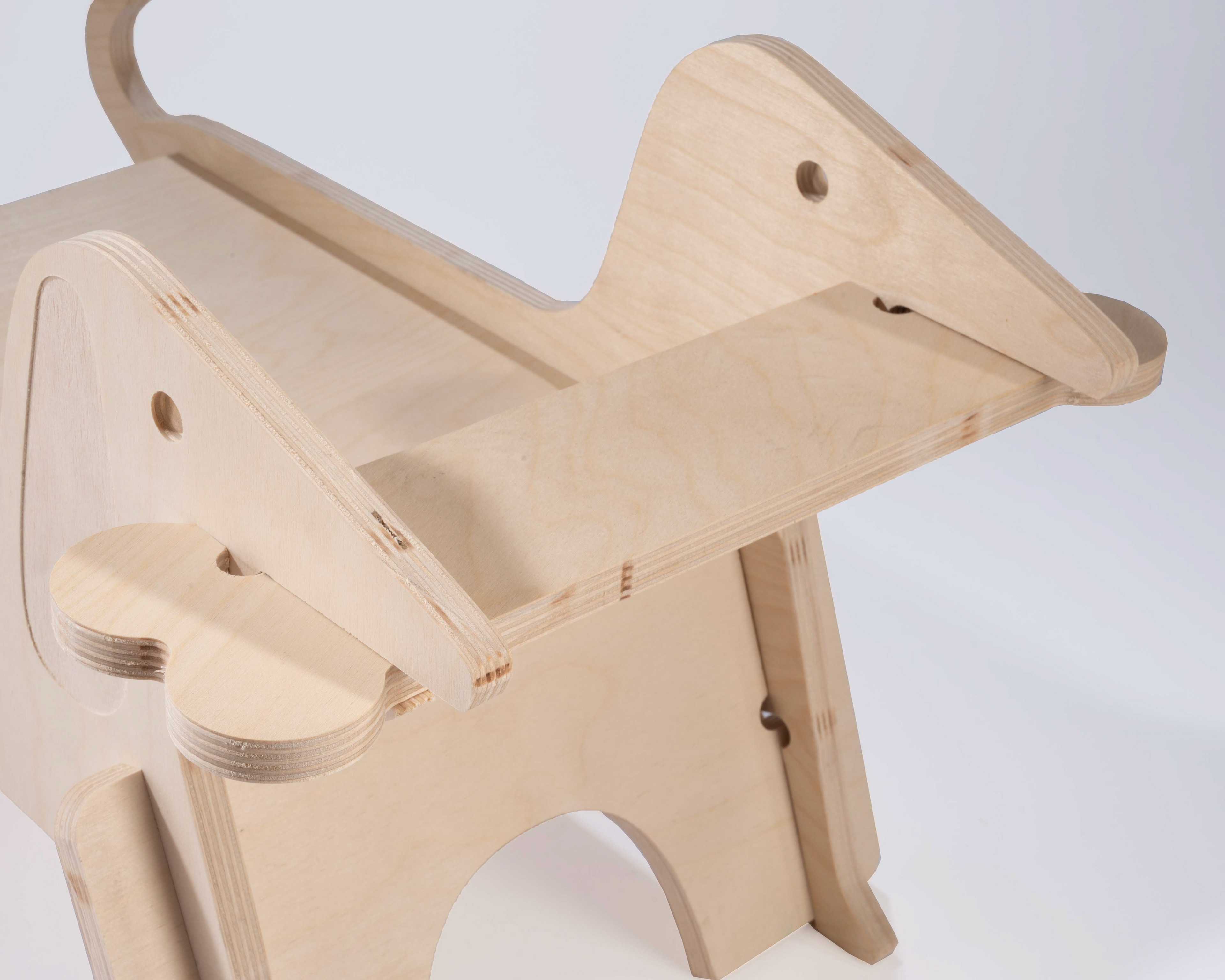
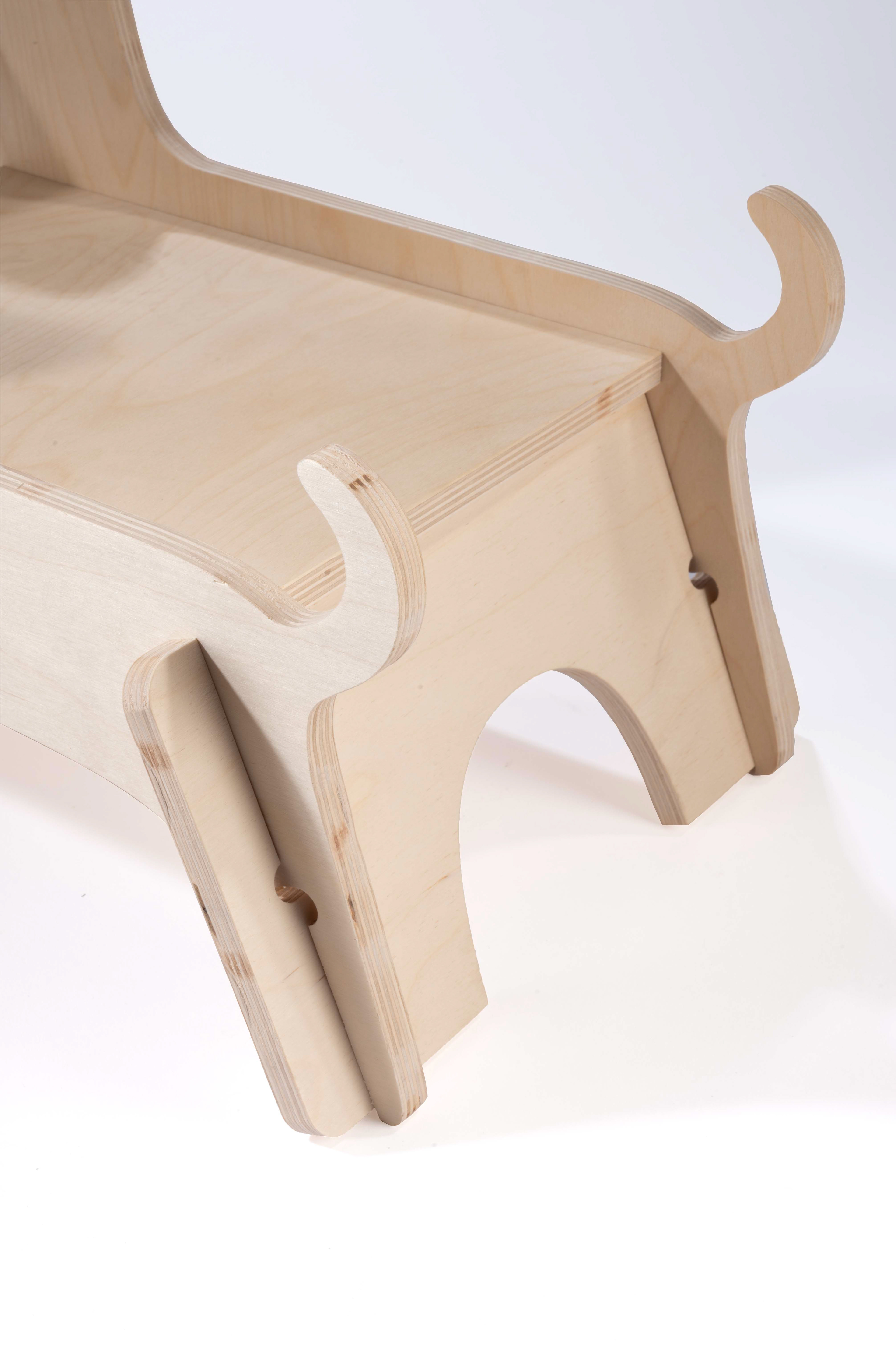
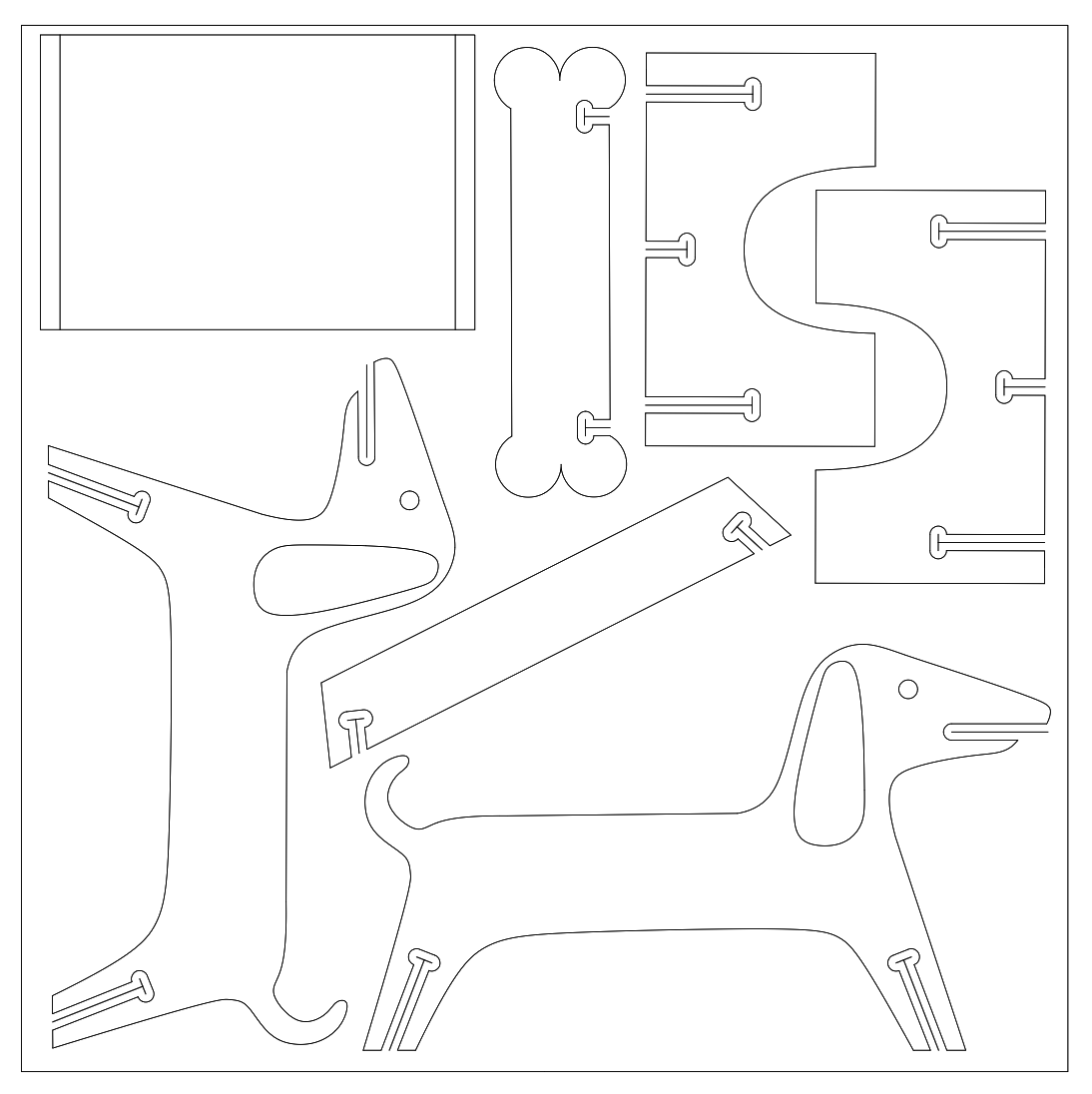
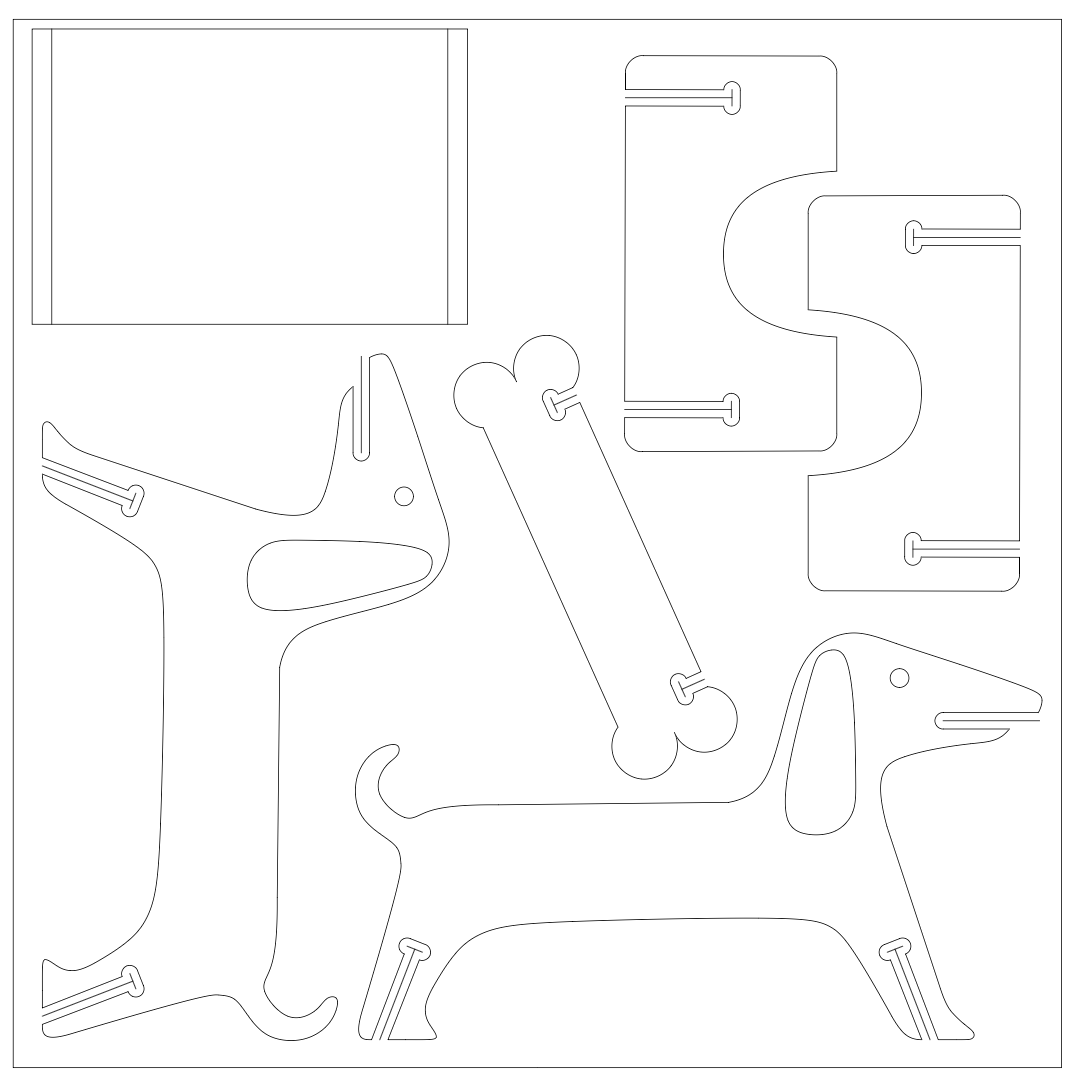
For my piece, I chose a dachshund (I prefer to refer to by its less formal title of wiener dog) as the basis of my design. My choice was primarily dictated by my love of wiener dogs but its naturally chair-shaped form definitely sealed the deal. My first attempt is pictured below on the left: this initial design incorporated a central "spine" component which was to ensure the chair's stability when used for sitting as well as more unconventional, but expected use of furniture of a small child.
My professors reminded us that throughout the project it is important to make the distinction between a "small human" and a child. While both of these terms are referring to the same thing from the outside, it is more important to focus on what is happening within the child. They think and interact with the world from a completely different perspective and mindset. For example, you can take a lounge chair made for the proportions of a regular-sized adult person and scale it down to fit the proportions of a 3 year old child. While you as an adult would intuitively use the chair for its intended purpose (lounging, laying for an prolonger period of time), a child will likely not sit in one place long enough to even enjoy the chair's intended use. More importantly, however, there is a gap between the behavioral tendencies and conditioning of a small child and fully developed adult.
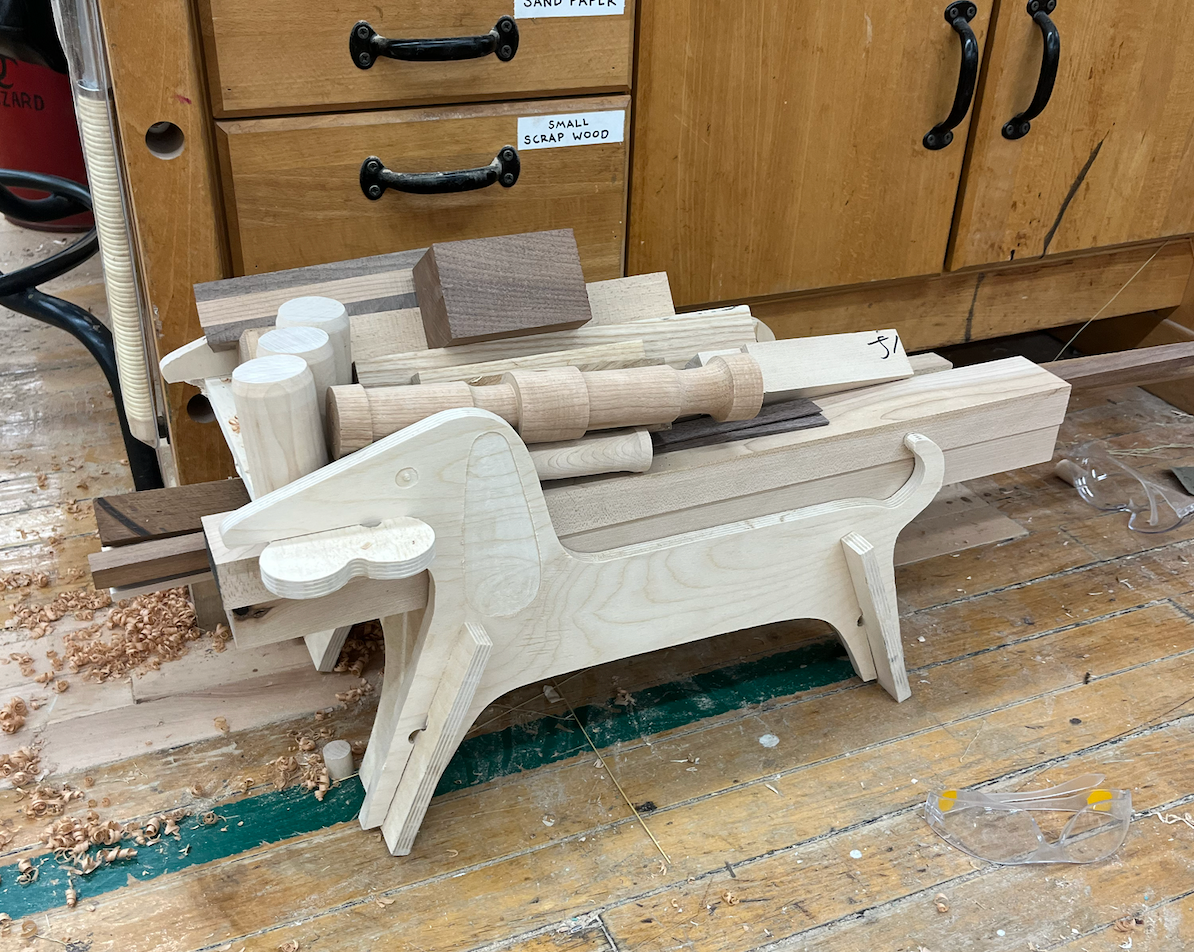
First version of the seat used to carry my scrap wood in the studio: Alternative but very handy use!